
The Evolution of the Onchain Capital Stack
Tokenization puts traditional financial assets onchain. A treasury bill, a fund share, or a loan position can be represented as a token, held in a wallet, and transferred on a blockchain. The token is the starting point, and just as important is what comes after: vault infrastructure that handles subscriptions, redemptions, pricing, and access controls as a primary market interface for institutional assets.
The onchain capital stack
Capital markets are built in layers. An investor holds an ETF share, which owns CLO notes, which are tranches of CLO vehicles, which hold portfolios of syndicated loans. Four layers deep, each one transforming what sits below it: tranching concentrates or disperses risk, securitization structures cash flows into tradeable instruments, fund wrappers reshape access and regulatory structure. The same pattern is assembling onchain, where each layer is a composable vault:
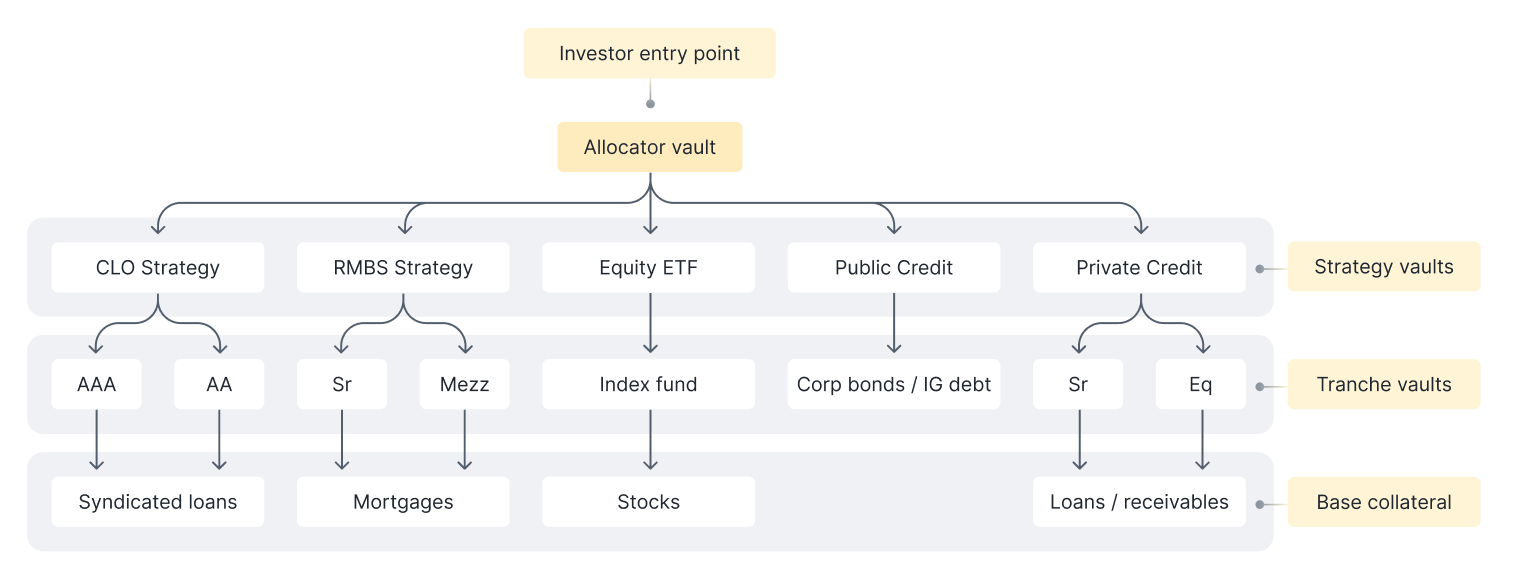
Serving every layer of the capital stack requires infrastructure that doesn't constrain what can be built on it. Centrifuge's protocol was designed from the start around properties that most vault platforms bolt on later, if at all: multi-asset (a single pool accepts deposits in multiple assets through separate vaults that share the same balance sheet and issue the same receipt token), multi-execution-path (multiple vaults for the same asset with different execution logic, fees, and settlement timing), multichain (hub-and-spoke architecture across any number of chains from a single deployment), and multi-share-class (independent pricing, transfer restrictions, and fee structures per share class, enabling onchain tranching).
How the stack evolves
First: tokenization of existing products. An offchain fund gets a token wrapper so it can be held and transferred onchain. A CLO ETF or a treasury fund becomes accessible as a tokenized vault on Centrifuge. At this stage the fund itself still operates offchain. The vault handles subscriptions, redemptions, and distribution, but the underlying portfolio management happens in traditional systems.
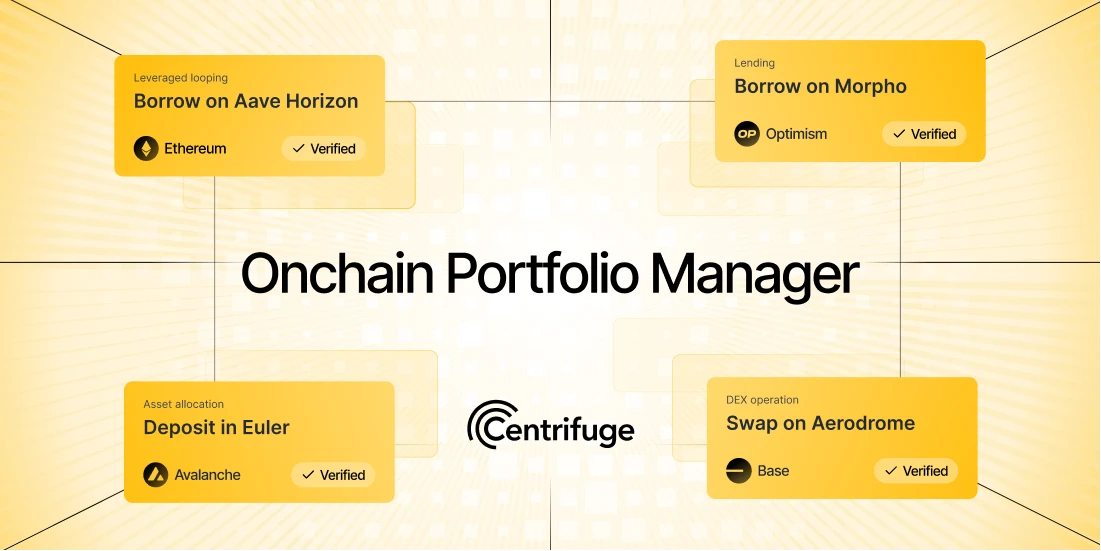
Then: onchain asset management. The strategy vault doesn't just wrap an offchain fund. It actively manages positions onchain: allocating across DeFi protocols, rebalancing between tokenized assets, executing multi-step strategies through the Onchain PM. The vault becomes the fund, not a wrapper around one. NAV is computed from onchain accounting. Allocations are transparent. Settlement is programmatic.
Then: native onchain origination. The base collateral layer (loan pools, receivables) is structured and originated natively onchain rather than being tokenized copies of offchain assets. Vertically integrated originators source, structure, and manage assets directly through onchain infrastructure. At this stage, every layer of the capital stack from base collateral to allocator vault operates natively onchain.
This progression has already started. Tokenized treasuries launched as single-asset wrapper products. Within a year, they became collateral in lending protocols, underlying assets in yield strategies, and components of multi-asset portfolio funds. Each new use case required vault infrastructure that didn't exist yet. The stack fills in from the top down.
The infrastructure that enables this needs to be general-purpose enough to support asset classes that don't exist yet, composable enough to let vaults build on vaults, and operationally mature enough for institutional capital.
What’s next
Centrifuge V3.2 is built on foundations that enable the future of onchain asset management. This blog series will cover each core design consideration and how asset managers, credit funds and fintech partners should think about building their institutional vaults strategy.
- The programmable vault stack, an immutable core with every extension point configurable without touching security-critical code.
- Asynchronous settlement, not as a workaround but as a structural requirement for institutional asset management.
- Multichain distribution through hub-and-spoke architecture, automatic batching, and multi-adapter security.
- Onchain double-entry bookkeeping that keeps NAV accurate across chains and in-flight transfers.
- The security model that makes shared, immutable infrastructure a better foundation than bespoke deployments.


Ready to get started?
Centrifuge’s real-world asset tokenization platform brings the full power of onchain finance to asset managers and investors.


